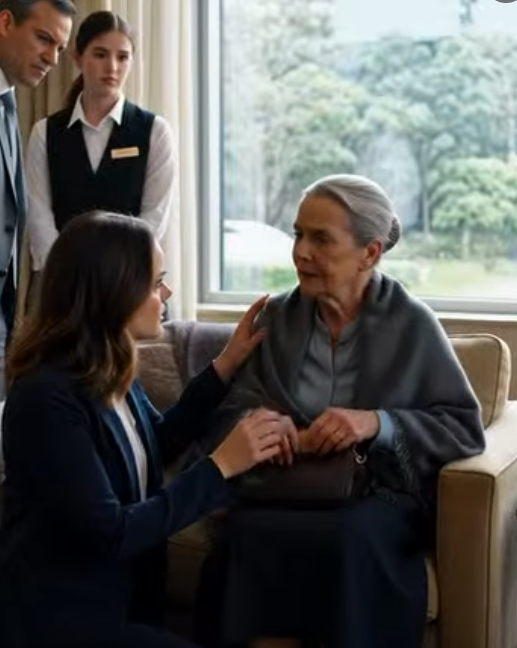
The whole lobby went silent when a waitress stepped between a millionaire’s family and the old woman they were trying to control.
“Don’t touch my mother!”
The shout cracked through the marble lobby of the Parkridge Hotel in Boston. Guests turned from the gold-framed mirrors, from their cups of coffee, from the fountain where coins glittered under the lights.
Evelyn Whitmore, eighty-one years old and known in the city for owning half the brownstones on Harbor Street, swayed beside the fountain.
Her pearls trembled against her neck. One gloved hand reached for the air.
Behind her, her two sons hurried forward, both dressed too sharply for people who claimed to be worried. A thin man in a gray suit stood near the elevators, holding a folder against his chest.
But nobody moved fast enough.
Nobody except Clara.
She was a hotel waitress, twenty-six, with tired feet and coffee stains on her apron. She had been carrying a tray of lemon tea when she saw Evelyn’s face change — not confused, not dramatic, but terrified.
Clara dropped the tray.
Cups shattered.
She caught Evelyn just before the old woman hit the marble.
“Ma’am, breathe with me,” Clara whispered, lowering her gently to the floor. “In… and out. You’re safe.”
The oldest son grabbed Clara’s shoulder.
“She’s confused,” he snapped. “She gets like this. Move away.”
But Evelyn’s fingers locked around Clara’s wrist.
For a woman who could barely stand, her grip was fierce.
Her lips moved once.
Clara leaned closer.
“Please…” Evelyn whispered.
The family froze.
The man by the elevator looked down at his folder.
Clara said softly, “What is it, Mrs. Whitmore?”
Evelyn’s cloudy eyes filled with tears.
“Don’t let me sign.”
Her son’s face went pale.
“Mother, stop this.”
But Evelyn shook her head, weakly, painfully, as if she had been saving all her strength for this one sentence.
“They’re taking my house away from me.”
The lobby seemed to hold its breath.
The hotel manager stepped forward. The gray-suited man closed the folder. And Clara, still kneeling on the cold marble, wrapped both hands around Evelyn’s shaking fingers.
“No one is signing anything today,” Clara said.
For the first time, Evelyn looked at her family without fear.
And later, when she was seated safely by the window with a blanket over her knees, she asked Clara to bring her tea.
Not because she needed serving.
“Don’t touch my mother!”
The shout cracked through the marble lobby of the Parkridge Hotel in Boston. Guests turned from the gold-framed mirrors, from their cups of coffee, from the fountain where coins glittered under the lights.
Evelyn Whitmore, eighty-one years old and known in the city for owning half the brownstones on Harbor Street, swayed beside the fountain.
Her pearls trembled against her neck. One gloved hand reached for the air.
Behind her, her two sons hurried forward, both dressed too sharply for people who claimed to be worried. A thin man in a gray suit stood near the elevators, holding a folder against his chest.
But nobody moved fast enough.
Nobody except Clara.
She was a hotel waitress, twenty-six, with tired feet and coffee stains on her apron. She had been carrying a tray of lemon tea when she saw Evelyn’s face change — not confused, not dramatic, but terrified.
Clara dropped the tray.
Cups shattered.
She caught Evelyn just before the old woman hit the marble.
“Ma’am, breathe with me,” Clara whispered, lowering her gently to the floor. “In… and out. You’re safe.”
The oldest son grabbed Clara’s shoulder.
“She’s confused,” he snapped. “She gets like this. Move away.”
But Evelyn’s fingers locked around Clara’s wrist.
For a woman who could barely stand, her grip was fierce.
Her lips moved once.
Clara leaned closer.
“Please…” Evelyn whispered.
The family froze.
The man by the elevator looked down at his folder.
Clara said softly, “What is it, Mrs. Whitmore?”
Evelyn’s cloudy eyes filled with tears.
“Don’t let me sign.”
Her son’s face went pale.
“Mother, stop this.”
But Evelyn shook her head, weakly, painfully, as if she had been saving all her strength for this one sentence.
“They’re taking my house away from me.”
The lobby seemed to hold its breath.
The hotel manager stepped forward. The gray-suited man closed the folder. And Clara, still kneeling on the cold marble, wrapped both hands around Evelyn’s shaking fingers.
“No one is signing anything today,” Clara said.
For the first time, Evelyn looked at her family without fear.
And later, when she was seated safely by the window with a blanket over her knees, she asked Clara to bring her tea.
Not because she needed serving.
Because she did not want to sit alone anymore.
Clara brought the tea herself.
Not on a silver tray this time, and not with the careful hotel smile she had practiced for difficult guests. She carried it in both hands, slowly, as if the cup held more than hot water and lemon.
Evelyn sat by the tall window with a wool blanket over her knees. Outside, Boston moved on — taxis sliding past the curb, people hurrying under umbrellas, a woman pulling her coat tighter against the wind.
But inside the lobby, everything had changed.
Her sons stood near the fountain, whispering sharply to each other. The man in the gray suit kept smoothing the edge of his folder, though he had not opened it again.
Clara placed the cup beside Evelyn.
“Do you want sugar?” she asked gently.
Evelyn looked at her for a long moment.
“My husband used to ask me that every morning,” she said. “Even after forty-seven years. He never assumed.”
Her voice cracked on the last word.
Clara sat beside her, though she knew waitresses were not supposed to sit with guests.
“What were they asking you to sign?” Clara asked.
Evelyn’s fingers trembled around the teacup.
“They told me it was just a small arrangement. Something to make things easier. They said I was forgetful. That I was too old to manage Harbor Street anymore.”
She looked toward her sons.
“But I am not confused. I know my own front steps. I know the scratch on the kitchen door from when my youngest rode his tricycle into it. I know the rosebush my husband planted outside the dining room window.”
Her oldest son stepped forward.
“Mother, this is embarrassing.”
Evelyn did not flinch this time.
“No,” she said quietly. “What is embarrassing is raising boys who forgot where they came from.”
The words landed harder than any shout.
The hotel manager asked the gray-suited man to open the folder. He hesitated, then did. Inside were papers Evelyn had never truly agreed to — papers that would remove her name from the home she had lived in for almost sixty years.
And there, tucked behind them, was a note in Evelyn’s own handwriting.
Clara noticed it first.
The paper was folded small, with shaky letters on the outside:
For someone kind, if I lose my voice today.
Evelyn covered her mouth.
“I wrote that this morning,” she whispered. “I hid it in my purse. I thought nobody would listen.”
Clara unfolded it.
It explained everything.
Evelyn had been pressured for weeks. Her sons had told staff she was unwell. They had cancelled visits from old friends. They had spoken over her at dinners, answered questions meant for her, and slowly made her feel like a guest in her own life.
But Evelyn had not lost her mind.
She had only lost the courage to fight alone.
The gray-suited man lowered his eyes.
“I was told she understood,” he murmured.
“She understands perfectly,” Clara said. “That’s the problem.”
For the first time, the younger son looked ashamed. Not angry. Not proud. Just small.
“Mom,” he said, “we thought—”
“No,” Evelyn interrupted, her voice thin but steady. “You thought I would stay quiet.”
No one answered.
The manager asked the sons to leave the lobby. They protested at first, but too many people had seen, too many people had heard. They walked out through the revolving doors without the folder.
Evelyn watched them go.
Then her shoulders began to shake.
Clara thought she was crying from fear, but Evelyn reached for her hand and held it like family.
“I kept thinking,” Evelyn whispered, “that if my own children would not protect me, then perhaps no one would.”
Clara’s eyes softened.
“My mother used to say strangers are sometimes just people God sends before we know their names.”
Evelyn smiled through her tears.
It was a tired smile. A bruised smile. But it was real.
That evening, Evelyn did not return to Harbor Street alone.
Her longtime housekeeper came for her, along with an old neighbor named Mrs. Bell, who arrived wearing rain boots and a purple scarf, carrying a casserole dish as if that could fix anything.
“Evelyn Whitmore,” Mrs. Bell said, marching into the lobby, “you are coming home, and I am sleeping in the guest room tonight. I already fed your cat.”
Evelyn laughed.
A small laugh, but it filled the corner by the window like warm light.
Before she left, she turned to Clara.
“You saved more than a house today,” Evelyn said.
Clara shook her head. “I only listened.”
“That is rarer than you think.”
Weeks passed.
The Parkridge Hotel replaced the broken cups. The fountain kept glittering. Guests came and went.
But every Thursday afternoon, Evelyn returned.
Not for business.
Not for meetings.
She came for lemon tea by the window.
And Clara always brought two cups.
Sometimes they talked about roses. Sometimes about recipes. Sometimes Evelyn shared stories of her late husband sanding the porch rail by hand, or dancing with her in the kitchen while soup simmered on the stove.
One Thursday, Evelyn arrived with a small envelope.
Inside was a photograph of her old brownstone on Harbor Street. In the front window, beside the lace curtains, sat a vase of fresh yellow flowers.
On the back, Evelyn had written:
A home is not protected by walls. It is protected by the people brave enough to care.
Clara pressed the photo to her heart.
That spring, the rosebush bloomed brighter than it had in years.
And on the porch of the old house, two women sat side by side — one eighty-one, one twenty-six — drinking tea from mismatched cups, watching the evening settle softly over Harbor Street.
Evelyn was no longer sitting alone.
And Clara, who had once thought she was only passing through other people’s lives with a tray in her hands, finally understood something beautiful:
Sometimes one small act of kindness becomes the door someone was praying would open.
Have you ever met a stranger who stood beside you at exactly the right moment?
Tell me what you felt while reading Evelyn and Clara’s story. I’d love to hear your thoughts.